Proje Kapsamı
, Ana firma ve bağlı alt firmalar için özel proforma yönetim sistemi geliştirildi
Bu proje, SaaS olarak değil; yalnızca ana firma ve 3 alt firmanın iç satış ve teklif operasyonlarını yönetmek üzere özel olarak geliştirildi. Amaç, manuel hazırlanan teklif dosyalarını, dağınık müşteri kayıtlarını ve takip edilmesi zor fiyatlandırma süreçlerini tek bir web uygulaması altında toplamaktı. Sistem sayesinde satış ekipleri müşteri taleplerini kaydedebilir, ürünleri tekliflere ekleyebilir, fiyatlandırmaları yönetebilir, proforma belgelerini oluşturabilir ve tüm süreci merkezi olarak takip edebilir. Referans alınan firma yapılarında forklift, depo ekipmanı, iş makinesi ve yedek parça gibi ürün kategorilerinin teklif odaklı sunulduğu görülmektedir.
Çoklu Firma Yapısı
, Ana firma ve alt firmalar için ayrıştırılmış operasyon modeli
Sistem, tek bir şirket kullanımıyla sınırlı kalmayacak şekilde ana firma ve bağlı alt firmaların operasyonel ihtiyaçlarına göre kurgulandı. Her firma için teklif kayıtları, müşteri bilgileri, ürün tercihleri ve raporlama ihtiyaçları ayrı yönetilebilecek şekilde yapılandırıldı. Bu yaklaşım, grup şirketlerinde hem merkezi kontrolü korur hem de alt firmaların kendi satış süreçlerini bağımsız şekilde takip etmesine olanak sağlar. Böylece teklif süreçleri şirket bazında ayrışırken yönetim tarafında bütünsel görünürlük elde edilir.
Teklif Oluşturma Akışı
, Ürün seçimi, fiyatlandırma ve müşteri bilgileri tek ekranda yönetildi
Teklif hazırlama sürecinde kullanıcıların ürünleri kolayca seçebilmesi, miktar ve birim fiyat bilgilerini anlık düzenleyebilmesi, müşteri bilgilerini teklif ile ilişkilendirebilmesi ve toplam tutarları sistem üzerinden otomatik hesaplayabilmesi sağlandı. Dinamik form yapısı, modal pencereler ve görsel bildirimlerle kullanıcıların işlem akışı sadeleştirildi. Bu yapı, özellikle ürün çeşidi fazla olan forklift yedek parça, depo ekipmanı ve iş makinesi gibi sektörlerde teklif hazırlama süresini azaltır ve manuel hesaplama hatalarını minimuma indirir.
Ürün ve Müşteri Yönetimi
, Teklif süreçlerini hızlandıran merkezi kayıt altyapısı
Sistemde ürünler, müşteriler ve teklifler arasındaki ilişkiler detaylı şekilde modellenmiştir. Ürün bilgileri, fiyatlar, açıklamalar ve kategori yapıları teklif oluşturma ekranlarında hızlı kullanılabilecek şekilde düzenlendi. Müşteri kayıtları ise teklif geçmişiyle ilişkilendirilerek satış ekiplerinin önceki görüşmeleri, geçmiş fiyatlandırmaları ve oluşturulan proformaları takip etmesini kolaylaştırdı. Referans alınan sitelerde yedek parça ve ekipmanların farklı kategori yapılarıyla sunulması, bu sistemde ürün veri modelinin esnek kurgulanmasını gerekli hale getirmiştir.
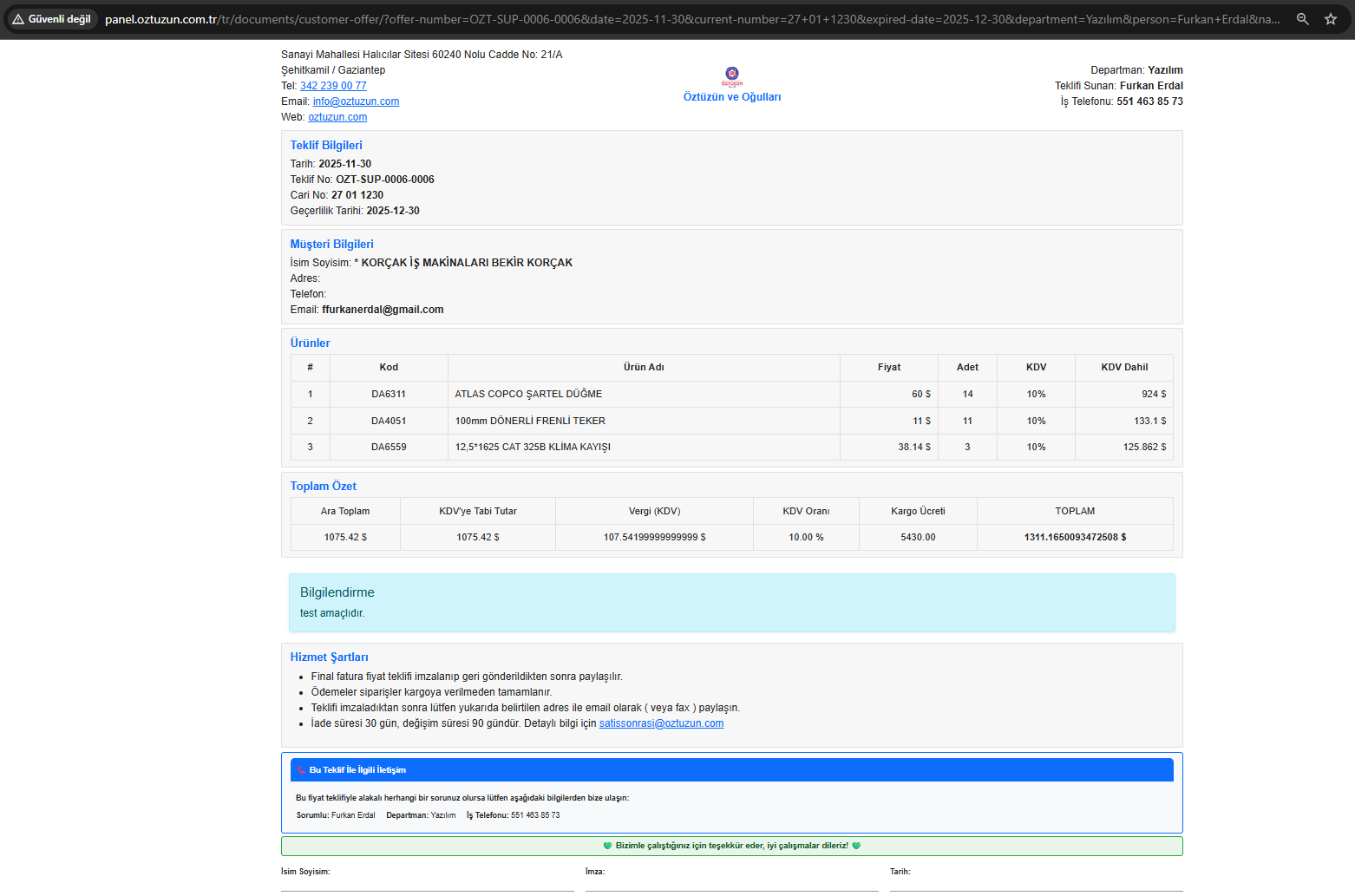
PDF Proforma Oluşturma
, Hazırlanan teklifler kurumsal PDF belgelerine dönüştürüldü
Sistemin en kritik modüllerinden biri PDF proforma oluşturma altyapısıdır. Kullanıcı tarafından hazırlanan teklif; müşteri bilgileri, ürün listesi, miktarlar, fiyatlar, toplam tutarlar, firma bilgileri ve açıklama alanlarıyla birlikte kurumsal bir PDF dokümanına dönüştürülür. Bu sayede satış ekipleri teklifleri manuel Word/Excel dosyalarında hazırlamak yerine sistem üzerinden standart formatta oluşturabilir. PDF çıktıları dijital olarak arşivlenebilir, yazdırılabilir veya e-posta/mesajlaşma kanalları üzerinden müşteriye iletilebilir.
Backend ve API Mimarisi
, Django REST Framework ile güvenli ve sürdürülebilir servis altyapısı
Backend tarafında Django ve Django REST Framework kullanılarak güçlü bir API mimarisi geliştirildi. Proforma ve teklif CRUD işlemleri, ürün ekleme, müşteri yönetimi, revizyon takibi, onay durumları, kullanıcı yetkilendirme ve raporlama endpoint’leri backend üzerinden kontrollü şekilde yönetildi. API yapısı frontend ile JSON formatında haberleşecek şekilde tasarlanarak sistemin genişletilebilirliği artırıldı. Bu yapı, ileride yeni firma, yeni rapor, e-posta gönderimi, stok entegrasyonu veya ERP bağlantısı gibi ek modüllerin sisteme daha kolay dahil edilmesine imkan sağlar.
ReactJS Arayüz Geliştirme
, Satış ekipleri için hızlı, modern ve interaktif kullanıcı deneyimi
Frontend tarafında ReactJS ve Bootstrap kullanılarak modern, responsive ve etkileşimli bir arayüz geliştirildi. Kullanıcılar teklif hazırlarken ürün satırları ekleyebilir, fiyat ve miktar değişikliklerini anlık görebilir, müşteri seçimi yapabilir ve işlem sonuçlarını görsel bildirimlerle takip edebilir. Teknik olmayan personelin de hızlı adapte olabilmesi için arayüz sade ve operasyon odaklı kurgulandı. Bu yaklaşım, teklif hazırlama ekranlarının günlük satış temposuna uygun şekilde hızlı ve anlaşılır çalışmasını sağlar.
Raporlama ve Satış Takibi
, Teklif performansını ölçülebilir hale getiren raporlama yapısı
Sistem yalnızca proforma oluşturmak için değil, satış süreçlerini analiz edebilmek için de tasarlandı. Raporlama modülüyle belirli tarih aralıklarında oluşturulan teklifler, kullanıcı bazlı performans, ürün bazlı talep yoğunluğu ve firma bazlı teklif dağılımı izlenebilir hale getirildi. Bu yapı, yöneticilerin hangi ürünlerin daha çok teklif edildiğini, hangi satış personelinin daha aktif olduğunu ve teklif süreçlerinin hangi alanlarda iyileştirilebileceğini görmesini sağlar. Böylece sistem, operasyonel bir araç olmanın yanında karar destek altyapısı da sunar.
Yetkilendirme ve Operasyon Güvenliği
, Firma, kullanıcı ve rol bazlı kontrollü erişim yapısı
Ana firma ve alt firmalar için geliştirilen sistemde yetkilendirme yapısı kritik öneme sahiptir. Kullanıcıların yalnızca kendi rolüne ve bağlı olduğu firma yapısına uygun kayıtları görüntüleyebilmesi için backend seviyesinde erişim kontrolleri uygulandı. Satış personeli teklif oluşturabilirken, yöneticiler onay, raporlama ve firma genelindeki teklif süreçlerini takip edebilir. Bu yapı, hem veri güvenliğini artırır hem de kullanıcıların yalnızca kendi operasyon alanlarına odaklanmasını sağlar.
Operasyonel Verimlilik ve Ticari Katkı
, Teklif hazırlama süresini azaltan ve satış süreçlerini standartlaştıran çözüm
Bu proforma sistemi, şirketin teklif yönetimini kişisel dosyalardan ve manuel takip yöntemlerinden çıkararak standart, dijital ve raporlanabilir bir yapıya taşıdı. Satış ekipleri daha kısa sürede daha düzenli teklif hazırlayabilirken, yöneticiler teklif durumlarını ve satış performansını merkezi olarak takip edebilir. Ürün çeşitliliği yüksek olan firmalarda teklif süreçlerinin sistemleşmesi; zaman tasarrufu, daha düşük hata oranı, daha profesyonel müşteri iletişimi ve daha güçlü iç operasyon kontrolü sağlar. Verilen referans sitelerde ürünler için teklif alma ve iletişim çağrılarının öne çıkarılması, bu tarz bir proforma sisteminin satış süreçlerinde doğrudan değer ürettiğini göstermektedir.