Problem
, Manuel katalog yönetimi yetersizdi
Binlerce perakende ürününü tek tek incelemek, içerik kurallarına göre elemek ve Shopify’a aktarmak hem yavaş hem hataya açıktı. Zincir bazlı stok/fiyat verisi ile mağaza kataloğu senkron tutulmalı, kabul edilmeyen ürünler katalogda kalmamalıydı.
Çözüm
, Uçtan uca operasyon paneli
Shopify OAuth ile güvenli bağlantı; Kroger API üzerinden zincir/konum bazlı katalog arama; Purely Filter Engine ile FOOD / BABY / PET / CLEANING kurallarında ACCEPTED–REJECTED–REVIEW; tekli/toplu Shopify import; UPC eşleştirme; arka plan scan/delete worker’ları ve Excel raporları.
Teknik Mimari
, Flask, worker’lar, yerel DB
Flask app factory; auth, products, collections, brands, integrations, filter, purely blueprint’leri. Shopify Admin API wrapper; Kroger client (auth, products, locations, bulk import, mapper); Filter Engine (Excel kurallar → JSON cache); job/progress UI ile uzun süren taramalar; SQLite ile import/eşleştirme kayıtları.
Sonuçlar
, Daha hızlı, daha tutarlı katalog
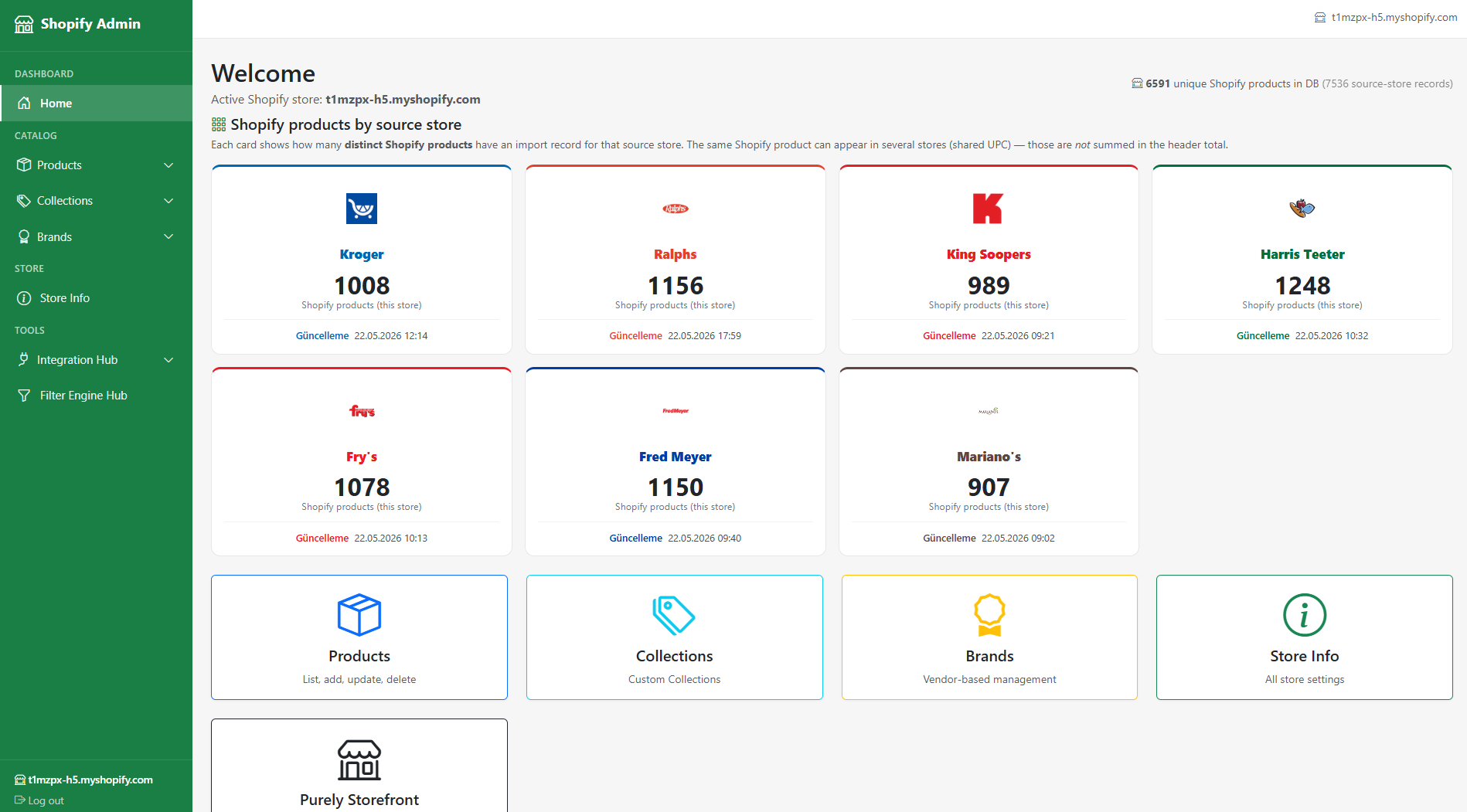
İçerik politikası kodla uygulanıyor; dry-run tarama sonrası hedefli silme; zincir bazlı dashboard ve eşleştirme ekranları; mağaza navigasyon senkronu ve store-first doğrulama/cleanup ile Purely vitrin operasyonları merkezileşti.